Guide
Pouch Size Guide: What Size Pouch Do I Need?
The pouch size you need depends on five things: pouch width and height, gusset depth, the density of your product, the shape it settles into, and the headspace you leave for sealing. Weight alone does not set the size — 250g of ground coffee occupies far less space than 250g of granola. As a starting point, 250g of coffee fits a 130 × 225mm pouch with a 70mm gusset, and 1kg of protein powder fits roughly 200 × 320mm with a 100mm gusset.
How are pouch sizes measured?
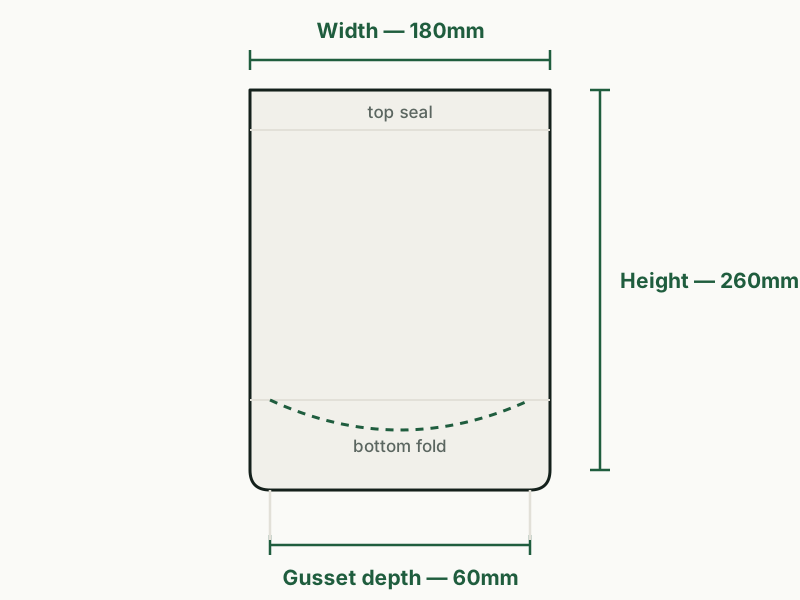
Pouch sizes are written as width × height × gusset, in millimetres. Width is the flat measurement across the front panel, height runs from the bottom fold to the top of the seal, and the gusset is the depth of the folded base when it opens out.
A pouch described as 180 × 260 × 60mm is 180mm wide, 260mm tall and 60mm deep at the base. If a supplier quotes only two numbers, the gusset is missing — and that is the number that decides how much the pouch actually holds. Our custom printed stand-up pouches are made to your dimensions, so the chart below is a starting point rather than a fixed range.
What does the gusset do?
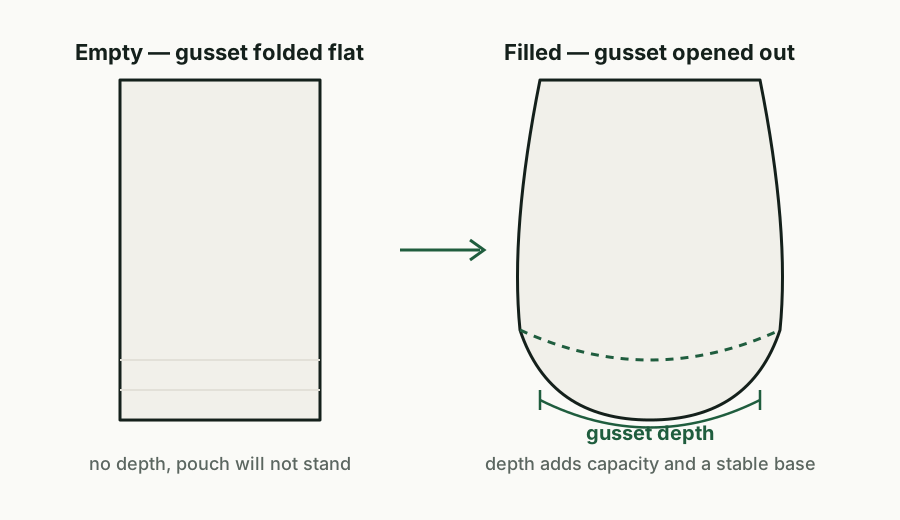
A pouch gusset is the folded section at the bottom of a stand-up pouch that expands when filled, increasing capacity and helping the pouch stand upright.
Because the gusset adds depth, it has a bigger effect on capacity than height does. Two pouches at 180 × 260mm can differ by 200g of fill if one has a 40mm gusset and the other 80mm. A deeper gusset also gives a wider base, which makes the pouch more stable on shelf — useful for tall formats that would otherwise topple. Flat pouches have no gusset at all; see stand-up vs flat pouch for how that changes format choice.
Pouch size chart by fill weight
The sizes below are indicative dimensions for a stand-up pouch, based on typical densities for each product. Treat them as a working starting point.
| Fill weight | Typical products | Indicative size (W × H × gusset) | Note |
|---|---|---|---|
| 50g | Spice blends, tea samples, sweets | 100 × 160 × 40mm | At this size a flat sachet is often the better format unless the pouch needs to stand. |
| 100g | Coffee, spices, sweets | 120 × 190 × 50mm | Fine powders fill the base first; light, bulky products need a taller pouch. |
| 250g | Coffee, granola, pet treats | 130 × 225 × 70mm | The most common retail size. Granola at 250g usually needs 160 × 250 × 80mm. |
| 500g | Coffee, protein powder, pet treats | 180 × 260 × 60mm | Add a zip and you lose 15–20mm of usable height to the closure. |
| 1kg | Protein powder, granola, dry pet food | 200 × 320 × 100mm | At 1kg, film gauge and seal strength matter as much as dimensions. |
What pouch size do I need for 100g?
For 100g, a stand-up pouch of around 120 × 190mm with a 50mm gusset is a sensible starting point.
That works for medium-density products such as coffee, spices and sweets. A light, bulky product — puffed snacks, dried herbs, loose leaf tea — takes up more volume per gram and usually needs a taller pouch at the same width, closer to 130 × 210mm.
What pouch size do I need for 250g?
For 250g, around 130 × 225mm with a 70mm gusset suits most dense products.
That covers ground and whole bean coffee, protein powder and pet treats. Granola and similar bulky products at the same weight typically need 160 × 250mm with an 80mm gusset, because they occupy roughly twice the volume.
What pouch size do I need for 500g?
For 500g, around 180 × 260mm with a 60mm gusset is the usual reference size.
This is a well-proven 500g coffee format. For lighter products, increase the height before the width — a taller pouch keeps the shelf footprint the same while adding volume. If you are adding a zip, allow another 15–20mm of height for the closure.
What pouch size do I need for 1kg?
For 1kg, around 200 × 320mm with a 100mm gusset is a practical starting point.
At this weight the base does the work, so the gusset matters more than at smaller sizes. A shallow gusset on a 1kg pouch produces a tall, unstable pack that leans forward on shelf. Heavier fills also need a thicker film and a wider bottom seal so the pouch survives handling and transit.
Why does product density affect pouch size?
Product density is the weight of your product per unit of volume. A pouch holds volume, not weight, so density decides how much of a given product fits.
This is why 250g of three products can need three different pouches. Ground coffee is dense and settles tightly, so it fills a compact pouch. Sweets are irregular and trap air between pieces, so the same weight takes noticeably more room. Protein powder is fine and dense but aerates during filling, then settles — so it needs headspace at fill that disappears on shelf.
- Dense and free-flowing — ground coffee, salt, sugar: smallest pouch for the weight
- Medium — protein powder, spices, dried fruit: mid-range, allow for settling
- Bulky or irregular — granola, sweets, puffed snacks, dried herbs: largest pouch for the weight
How much headspace should I leave?
Headspace is the empty space above the product once the pouch is filled. Allow around 15–20% of the pouch volume.
You need it for three reasons: the top seal must close on clean, product-free film or it will fail; a zip sits below the seal and needs clearance above the fill to open and close properly; and hand filling is less precise than machine filling, so a manual line needs more margin. Products that settle, such as powders and granola, look under-filled on shelf if you allow too much — test with the real product before committing to a size.
The reliable way to get the size right
Weigh out your actual product into a measuring jug and note the volume it occupies. Send us that volume with your target fill weight and we will convert it into dimensions, then produce a dieline for your job. This takes five minutes and is far more accurate than working from any chart, including this one.
Custom sizes rarely cost more than a standard one, because a dieline is produced for your run either way. Get my pouch quote and tell us what you are packing, and we will size it with you.
Not sure which pouch size you need? Tell us what you are packing and we will check the specification.
Get My Pouch Quote →Related questions
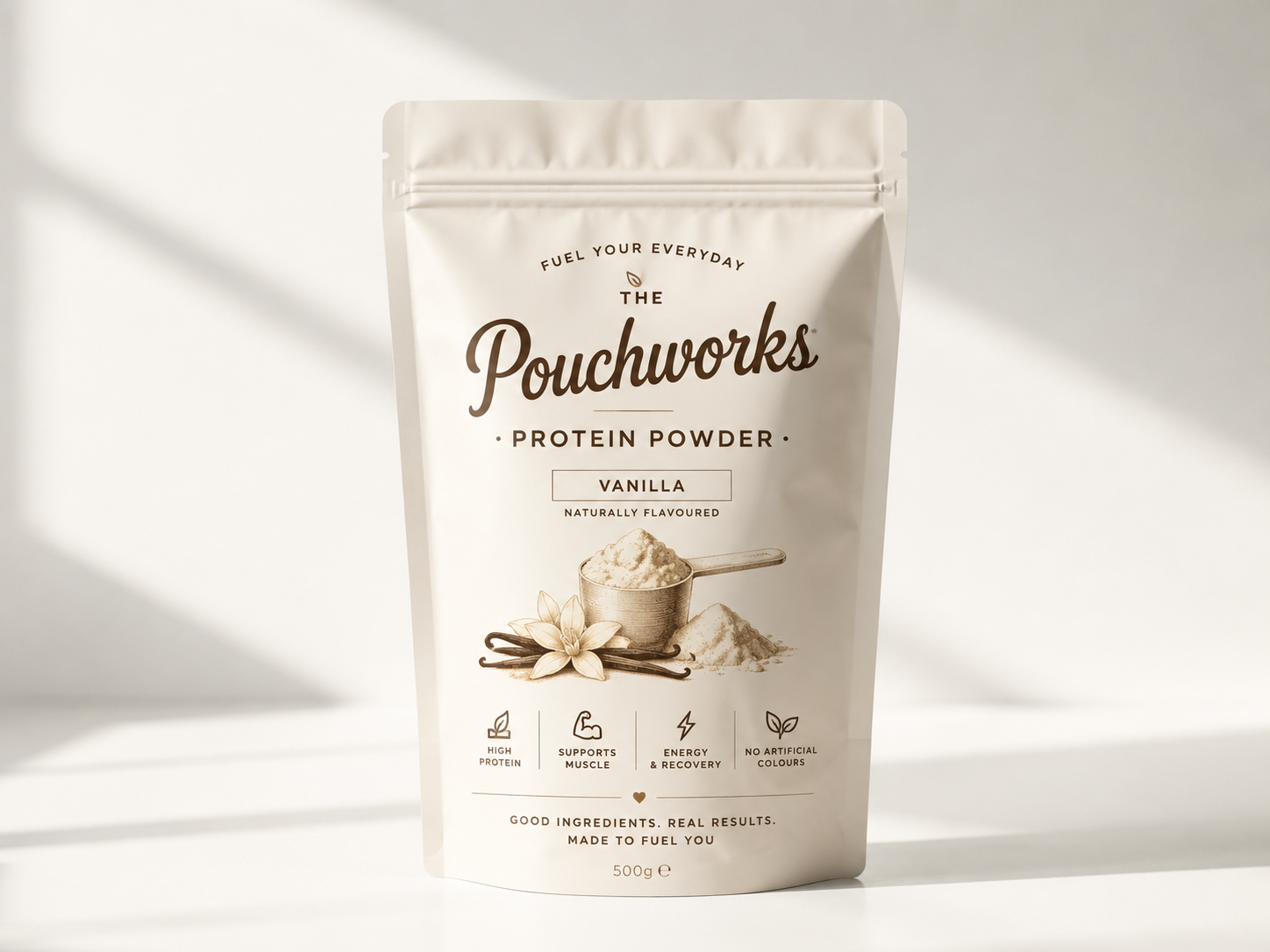
Custom Printed Stand-Up Pouches
The format most of these sizes refer to.
Learn more →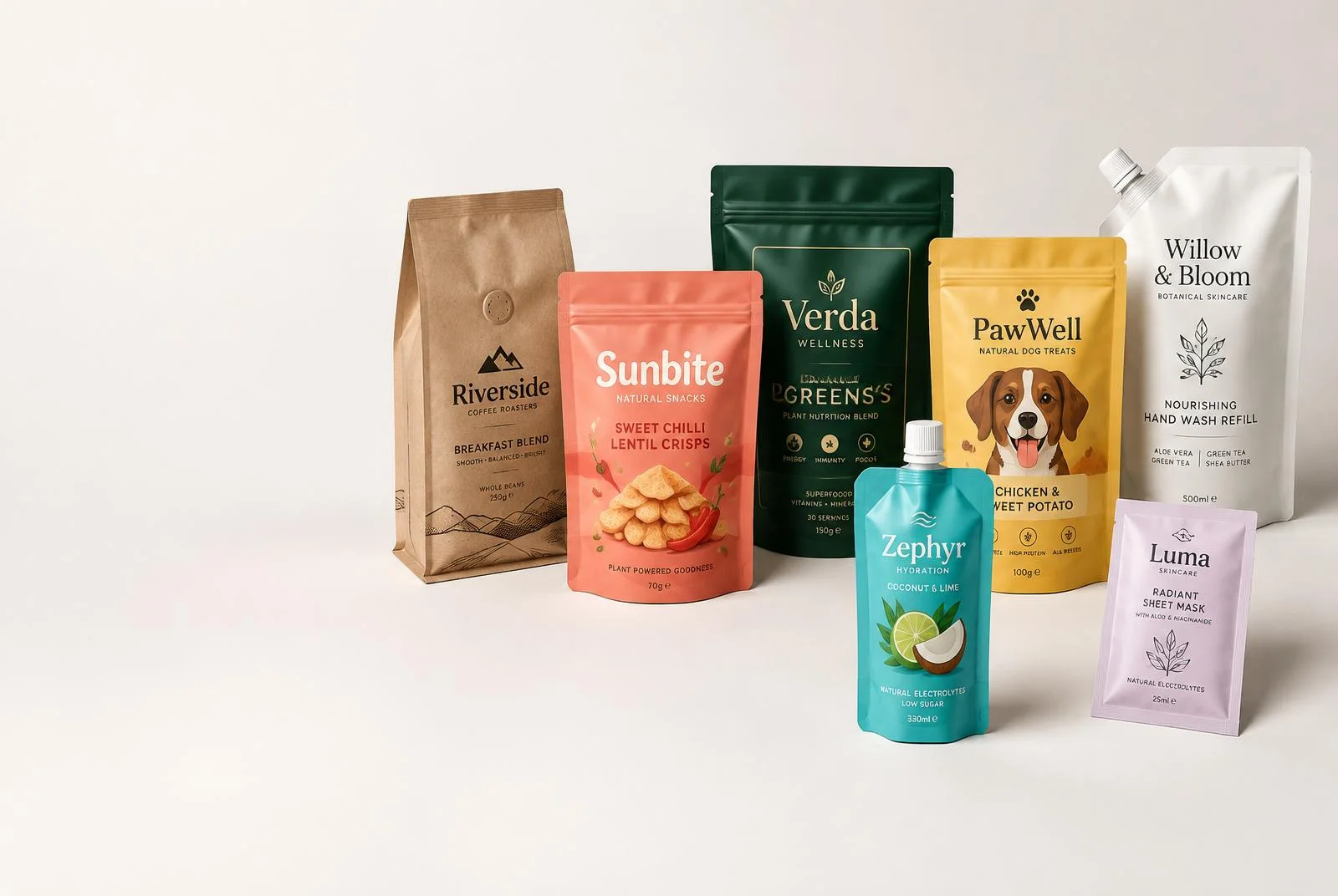
Stand-Up vs Flat Pouch
Choose the format before you size it.
Learn more →Pouch Artwork Setup Guide
Once your size is set, build the artwork.
Learn more →Minimum Order Quantities Explained
How size interacts with minimum quantities.
Learn more →Quick answers
What size pouch do I need for 100g of coffee?
Around 120 × 190mm with a 50mm gusset. That holds 100g of ground or whole bean coffee with enough headspace to seal cleanly.
What size pouch do I need for 250g of coffee?
Around 130 × 225mm with a 70mm gusset. That holds 250g of whole bean with room to seal, and a little more if you are packing ground coffee, which is denser.
Can I order a custom pouch size?
Yes, and it rarely costs more than a stock size, because a dieline is produced for your job either way. Give us the fill volume and we will work back to dimensions.
What does the gusset measurement mean?
It is the depth of the folded base when the pouch opens out and stands. It determines how much the pouch actually holds, which is why two pouches with identical width and height can have very different capacities.
How much headspace should I leave?
Around 15–20% of the pouch volume. You need room above the fill to make a clean top seal, and a zip closure needs more clearance than a plain heat seal.
Still have questions? Email hello@thepouchworks.com and we'll get back to you within one business day.